

Seasonal Experience Ideas That Make Your Brand More Memorable
In short: Seasonal experience ideas make your brand more memorable when they are tied to a moment guests already look forward to, like a winter recovery ritual or a patio opening, and when the offer is easy to find, trust and book on your website, Google Business Profile, social media and AI search.
- The best seasonal ideas build on moments your guests already look forward to, so you are not creating demand from nothing.
- One seasonal experience can feed a website page, a Google Business Profile offer post, social media posts, an email and your review requests.
- 93% of consumers have made a purchase after reading reviews, according to BrightLocal's 2026 survey, so current reviews matter as much as the idea itself.
- Clear pricing or a clear offer was one of the top three reasons people chose a local business for 29% of consumers.
- Check your website, listings and booking path before the season starts, not halfway through it.
You put real thought into your seasonal offers. The winter recovery package, the patio relaunch, the harvest tasting night. Your team is excited, your regulars love it, and then the season comes and goes with fewer bookings than you hoped for. It is easy to blame the idea. More often, the idea was fine. The people who would have loved it never found it, or found it and couldn't work out how to book.
For hospitality and wellness brands, good seasonal experience ideas give you something more useful than a short burst of attention. They give guests a reason to come back. A spring tasting menu or a winter recovery ritual can move your brand from familiar to memorable, because it feels timely, specific and worth talking about. But that only works when the offer is easy to discover and easy to trust.
Most guests meet your seasonal offer on a phone long before they meet it in person. Mindbody's 2026 guide to building an online brand for studios and spas describes how clients scroll through Instagram, check ratings and reviews, browse a website, and sometimes ask an AI assistant for a recommendation, all before they book. We see the gap on first calls every season: a beautiful holiday package that lives in a single Instagram post, with nothing on the website and nothing on Google. Here is how to close it.
Seasonal moments your guests already want
Restaurants, physiotherapy clinics, chiropractors and other experience-led businesses don't need to create interest from scratch. The strongest seasonal ideas build on moments your guests already look forward to: the first warm night on the patio, the busy weeks before the holidays, the January reset when everyone wants to feel better.
Definition, seasonal experience: a limited-time offer, event or service tied to a time of year or a moment your guests already care about, such as a holiday dining package, a winter recovery treatment or a patio opening, that gives people a timely reason to book.
Ideas that turn the calendar into demand
Seasonal ideas work best when they feel limited and easy to understand. For restaurants, that might mean chef-led tasting nights, holiday dining packages, a summer patio launch, a harvest menu, or a dinner with a local farm or winery. Each one carries its own urgency, because the moment will pass.
They also do double duty as marketing. One seasonal dinner can give you a page on your website, new menu photos, an email, a few social media posts, a Google Business Profile event post, and a line in your reservation confirmation. Instead of making content for the sake of it, the experience itself becomes the story you tell. Picture a Thursday in late October: the harvest menu is printed, the chef has posted one photo on Instagram, and the website still shows the summer menu. That gap is where bookings quietly go missing.
Seasonal ideas that make services feel timely and relevant
For wellness and service-based businesses, seasonal ideas usually land best when they are tied to a feeling or a ritual. A winter recovery treatment, a couples package for February, pre-wedding care in the spring, a back-to-routine massage series in September, or a gift card bundle for the holidays all give a client a clear reason to book now instead of later.
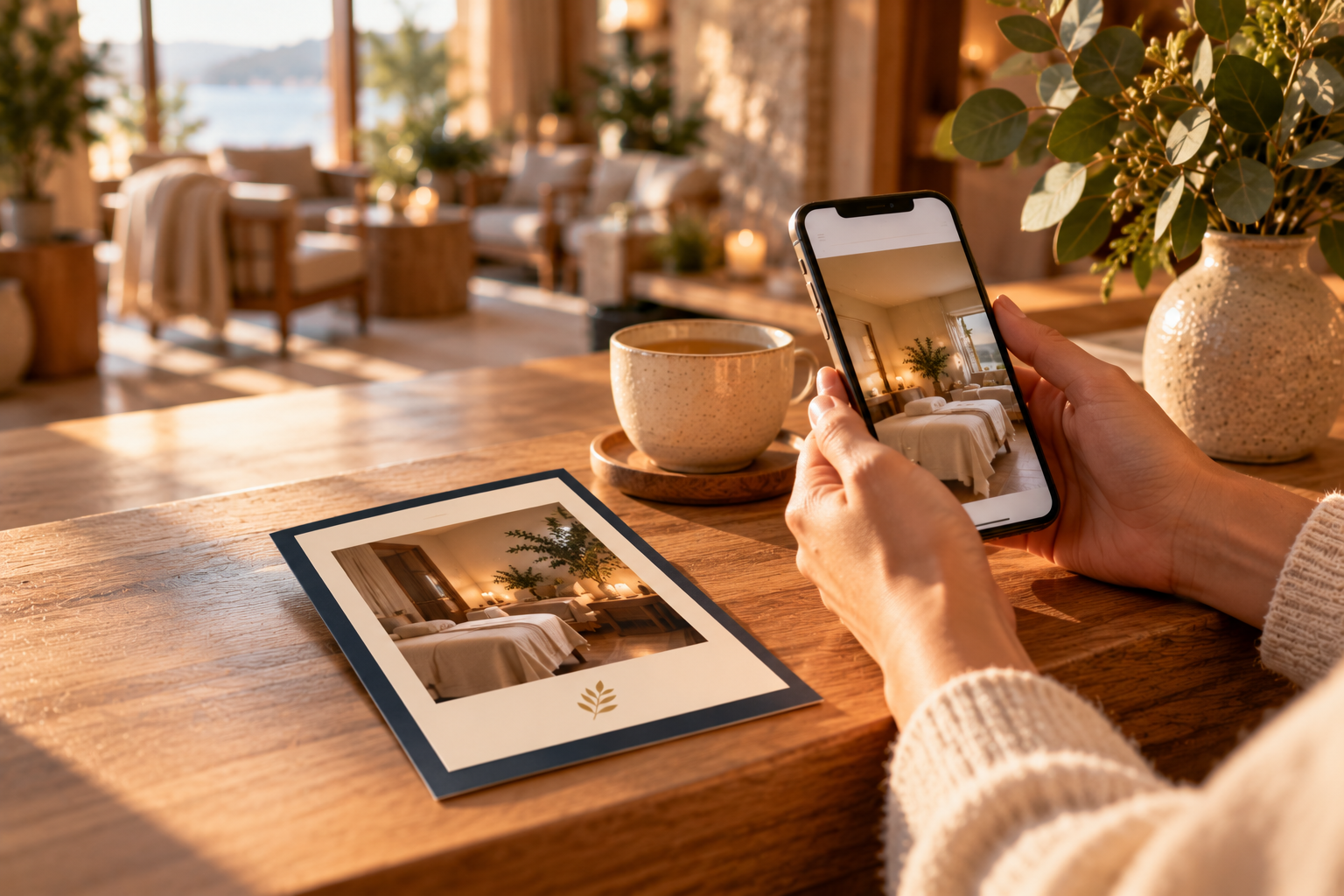
This is where your brand story carries the offer. Your clients are rarely choosing a service based on the treatment or appointment description alone. They are buying the feeling of rest, celebration or escape. That is why real photos of your space, treatment descriptions that sound like you, and visible proof from past clients do so much of the work. A physiotherapy or chiropractic clinic can use the same thinking: a spring "back to running" assessment is a seasonal experience too, even if nobody would call it a package.
Visibility and trust make seasonal ideas work harder
A memorable offer still needs to be easy to discover, easy to trust and easy to book. Many hospitality and wellness brands put real care into the experience, then put very little into the pages, listings and reviews that are supposed to bring people to it.
Reviews do much of the selling before anyone books
BrightLocal's 2026 Local Consumer Review Survey found that 93% of consumers have made a purchase after reading reviews, and 41% now say they always read reviews when looking at a business, up from 29% the year before. If your newest review is from last spring, a new guest may wonder whether the experience you are promoting this winter is still as good as people say.
A separate BrightLocal study of more than 1,200 local searchers, published in July 2026, found that 65% of people who were put off a business were put off by one or more reasons related to reviews, such as negative reviews, too few reviews or reviews that were out of date. Your seasonal campaign works best when current reviews, clear details and a website that confirms the guest is in the right place all back it up.
Your offer is being found in more places than your website
The same study found that 75% of consumers used more than one channel during their most recent search for a local business. Your future guest might see your holiday package on Instagram, check your Google Business Profile for hours, read your reviews, then ask ChatGPT whether you are worth the drive. AI search tools such as ChatGPT and Gemini are beginning to earn people's trust as a source in their own right, and they can only describe your seasonal offer if it is written down clearly somewhere they can read it.
This is the idea behind Search Everywhere Optimization: your brand showing up the same clear way on Google, in AI assistants, and in social search on Instagram, TikTok and YouTube. A seasonal offer is one of the easiest places to practice it, because everything about the offer is new and you control every word.
Where seasonal creativity turns into bookings you can measure
This is the point where strategy matters more than inspiration. We help boutique hospitality and wellness brands connect the experience a guest has in person to the online journey that leads to reservations, enquiries and repeat visits.
The work starts by finding what is getting in the way. Sometimes it is positioning, and the brand can't say in one sentence who the offer is for. Sometimes it is a website that looks polished but doesn't guide anyone toward booking. Sometimes the offer is worth promoting, but there is no page for it, no search visibility, and no clear story across reviews, social media and AI search.
That is why we bring together brand strategy, website design and messaging, Google Business Profile management, social media and Search Everywhere Optimization, usually starting with the Concierge Brand Audit. We map the gaps in how you are found first, then build the foundation that helps guests understand why your experience is worth choosing. Advisory clients work within a weekly strategic rhythm, so seasonal plans are made well before the season, not in the week it starts.
What strong execution looks like
Seasonal campaigns tend to perform better when every piece of your online presence has a job to do.
| Seasonal piece | What it should do |
|---|---|
| A page for the offer on your website | Explain the offer quickly, match what people search for, and lead to a booking |
| Menu or treatment page | Answer questions up front with clear details, pricing and next steps |
| Reviews | Show current, real feedback from recent guests |
| Mobile booking | Let someone book from their phone in a few taps |
| Google Business Profile | Post the offer or event with dates so it shows on Google Search and Maps |
| Social media and email | Reach new people and remind past guests to come back |
Google lets you add offer and event posts to your Business Profile, each with a title and dates, and an offer post automatically gets a "View Offer" button. Google also notes that posts older than six months are archived unless a date range is set, so giving every seasonal post clear dates is a good habit.
Clear pricing matters more than many brands expect. In BrightLocal's 2026 study, 29% of consumers named clear pricing or a deal or offer as one of the top three reasons they chose the business they contacted, and 32% of people who decided not to contact a business pointed to unclear pricing or no offers. A seasonal package with a price, dates and a booking button answers the question before your guest has to ask it.
What helps Ontario wellness businesses rank with a clearer brand story
Visibility for health, wellness and care businesses improves when search and storytelling work together. Local SEO matters, but ranking on its own won't fill your appointment book if your brand story is vague. Your service pages need to reflect how clients search, what results they care about, and why your experience feels different in your town and your category.
For a seasonal offer, that might mean a page called "Winter Recovery Massage in Oakville" instead of a line on your general services page that says "ask about our seasonal specials." The first gives Google, AI tools and a tired client something specific to find. The second gives them very little to hold on to.
That is why we focus on copy that matches how people search, Google Business Profile support, reviews, helpful content, and messaging that makes your treatments easy to understand. The goal is not more words. It is more clarity, stronger trust, and a booking journey that feels as calm and considered as the visit itself. Our guide to SEO and brand storytelling for wellness brands goes deeper on how the two work together. In one engagement, a boutique Nordic spa client grew its customer base by an average of 114% year over year across six months of working together. That came from the whole visibility and brand program rather than any single seasonal campaign.
What helps Ontario restaurants get more bookings
A restaurant website should answer practical questions fast. Your guests should be able to find the menu, hours, location, reservation options, event details and contact information without hunting for them. Seasonal dining experiences deserve the same clarity, with a page that says what is on offer, when it is happening, what it costs, and how to reserve.
Think about the guest deciding at 5 p.m. whether to book your holiday tasting menu for Saturday. If they have to open a PDF, pinch to zoom, and then call to ask whether there are seats left, the moment may pass before they reach the phone. A clear page with a reservation link keeps them moving.
It also helps to watch the right numbers. Platforms such as Tripadvisor give restaurants analytics on page traffic, reservation and order clicks, and listing engagement, and your Google Business Profile shows calls, direction requests and website clicks. If those rise during a seasonal campaign, the offer is likely doing its job. Our post on how Canadian restaurants can turn clicks into reservations walks through the booking path in more detail.
How to find the biggest gaps before your next campaign launches
The fastest way to waste a good seasonal idea is to launch it on top of problems nobody has fixed. If your positioning is unclear, your reviews are old, your service pages are thin, or your booking path is clumsy, even a strong idea will likely underperform.
A quick check you can run this week
- Search your business name on Google and Maps. Are your hours, photos and phone number current?
- Open your website on your phone. Can you find the seasonal offer and book it in under a minute?
- Read your five newest reviews. When were they posted, and did you reply?
- Ask ChatGPT or Gemini what your business offers this season. Does the answer match what you are selling?
- Look at your social media accounts. Does the offer look and sound the same as it does on your website?
When you want a full picture
Our Concierge Brand Visibility Audit is built to find these issues before you spend more. We review your positioning, messaging, website, search visibility, listings, content gaps, and the places where people give up before booking, so your next step is based on evidence instead of guesswork.
This is really important because people notice when a business seems quiet. BrightLocal found that 96% of consumers think it is important for a local business to actively manage how it appears online, and 62% of people who were put off a business gave at least one reason related to inactivity, such as old reviews, missing information or a listing that looked abandoned.
Make the season easier to discover, trust and book
Seasonal creativity gets attention. What builds loyalty is the combination of a timely experience, a clear brand story, and an online journey that makes it easy to go from finding you to booking you.
That is the work we do every week with boutique hospitality and wellness brands across Canada. If the booking step is where you lose people, our post on mobile booking problems for hospitality brands is a good next read. And if your next seasonal offer deserves more visibility than it got last year, a Clarity Call is a simple place to start.
The goal is a calendar that fills before the season starts, with guests who found your offer on their own because every place they looked told them the same clear story.
What are good seasonal experience ideas for a spa?
Tie the offer to a feeling guests already want at that time of year: a winter recovery treatment, a couples package for February, pre-wedding care in spring, or a holiday gift card bundle. Give each one a clear name, price and dates, and its own page on your website.
How far ahead should I promote a seasonal offer?
As a general rule, start four to six weeks before the season, and earlier for holiday packages and gift cards. That gives Google, AI tools and past guests time to see it. Put the website page, Google Business Profile post and social media posts live in the same week.
Should I add seasonal offers to my Google Business Profile?
Yes. Google lets you add offer and event posts with a title and dates, so the offer can show on Search and Maps, and offer posts include a View Offer button. Link the post to the matching page on your website so the details agree everywhere.
Do seasonal offers help my brand show up in AI search?
They can. AI tools such as ChatGPT and Gemini describe businesses using what is published about them. A seasonal offer with its own clear page, matching listings and recent reviews gives them specific, current facts to repeat when someone asks for a recommendation.
How do I know if a seasonal campaign worked?
Compare bookings, enquiries and gift card sales with the same period last year. Then check your Google Business Profile calls, website clicks and direction requests, plus your number of new reviews. If those rise together, the offer turned attention into bookings.
The first step is a free 30-minute Clarity Call. No pitch deck. You'll leave with at least one clear observation about where your brand is losing visibility or momentum, and one direction for what to fix first.
Miles runs every Clarity Call personally, with no obligation to continue after the call. Book Your Clarity Call Our deepest tier, an embedded strategic marketing partnership, is reserved for six founders at a time.This blog collection is written by Miles Harding and the Wondering Concierge team for the benefit of readers to be able to grow their business and get found online by more of their dream customers. The team includes human members with learned / lived experiences and expertise, as well as trained AI team members who assist with the creation and publication of this blog content. The team monitors Google and other guidelines for continued knowledge to help with SEO and AI usage. If you have any questions regarding the humans in the loop and how AI is used to follow these guidelines, contact Wondering Concierge at [email protected].