How to Build a Wellness Retreat Brand Around Your Local Region
In short: To build a wellness retreat brand around your local region, list what your landscape, seasons, makers and traditions offer, choose the one idea only your location can deliver, and carry that promise into the stay, your website and every listing, so guests see a place they can't find anywhere else.
- Many of your future guests are travelling within Canada. Canadians took 69.1 million domestic visits and spent $14.5 billion on domestic tourism in the first quarter of 2026, according to Statistics Canada.
- "Calm, nature and renewal" describes almost every retreat. Your region gives you details a competitor down the road can't copy.
- Write one promise tied to your place, then list the proof: the partners, rituals and seasons that make it true.
- Let the region shape the stay itself. Local scenery on a stay that could be anywhere creates a gap guests notice, and may mention in reviews.
- Tell the same regional story on your website, Google Business Profile and listings, because more travellers now plan trips with AI tools that read all of them.
Spend a few minutes looking at wellness retreat websites in your region and you'll start to notice a pattern. Many promise the same things: relaxation, reconnection and time surrounded by nature.
These are all valuable experiences, but they don't necessarily give someone a reason to choose your retreat over another.
Think about your own website. Does it communicate what makes your property, location and guest experience different? Or could the same message belong to another retreat just down the road?
For established wellness retreats and destination spas, building a recognizable brand starts with understanding what makes the experience uniquely yours.
If that sounds familiar, you're not alone. Most retreat owners we talk to built something real, with a sauna by the water, a cook who knows every farm on the road, and a trail walked most mornings. Yet online the retreat sounds like everyone else. Many have also been burned by marketing that promised a fresh look and changed nothing about who books.
The fix is rarely a new tagline. It's a wellness retreat brand built around the one thing no competitor can copy: the place you're in. This guide is for wellness retreats and destination spas that have been open for a few years, have loyal regulars, and want more of the right guests to choose them over bigger, better-known names.
Definition, regional brand positioning: the clear promise a wellness business makes about what guests will experience because of where it is, backed by real local partners, seasons and traditions, and carried through the stay, the website and every listing.
Why so many retreats sound the same online
As the wellness industry has grown, so has the language used to market it. Words like "restore," "reconnect" and "recharge" appear across countless retreat websites. There's nothing wrong with these words. They describe experiences guests are actively looking for. The challenge is that they don't tell someone what makes your retreat different.
When potential guests compare several properties, they need more than beautiful photography and familiar promises. They want to understand what they'll experience at your property, what makes it worth the journey and why they should choose you.
Your next guest probably lives a few hours away
According to Statistics Canada, Canadians took 69.1 million domestic visits in the first quarter of 2026, up 2.3% from the same period in 2025. They also spent $14.5 billion on domestic tourism, an increase of 5.1%. That's a significant domestic travel market for wellness retreats and destination spas to consider. Many travellers are looking for experiences closer to home, so giving them a clear reason to choose your property over another matters.
Wellness guests spend more, and choose more carefully
The Global Wellness Institute's 2025 Global Wellness Economy Monitor found that domestic wellness tourists spent 137% more per trip than the average domestic tourist in 2024. For retreat owners, that's an important market to pay attention to. Guests investing in wellness travel want to know what makes a stay worth the trip. Your location, local partnerships and the experiences you offer can all help give them a reason to choose your retreat.
Take stock of what your region gives you
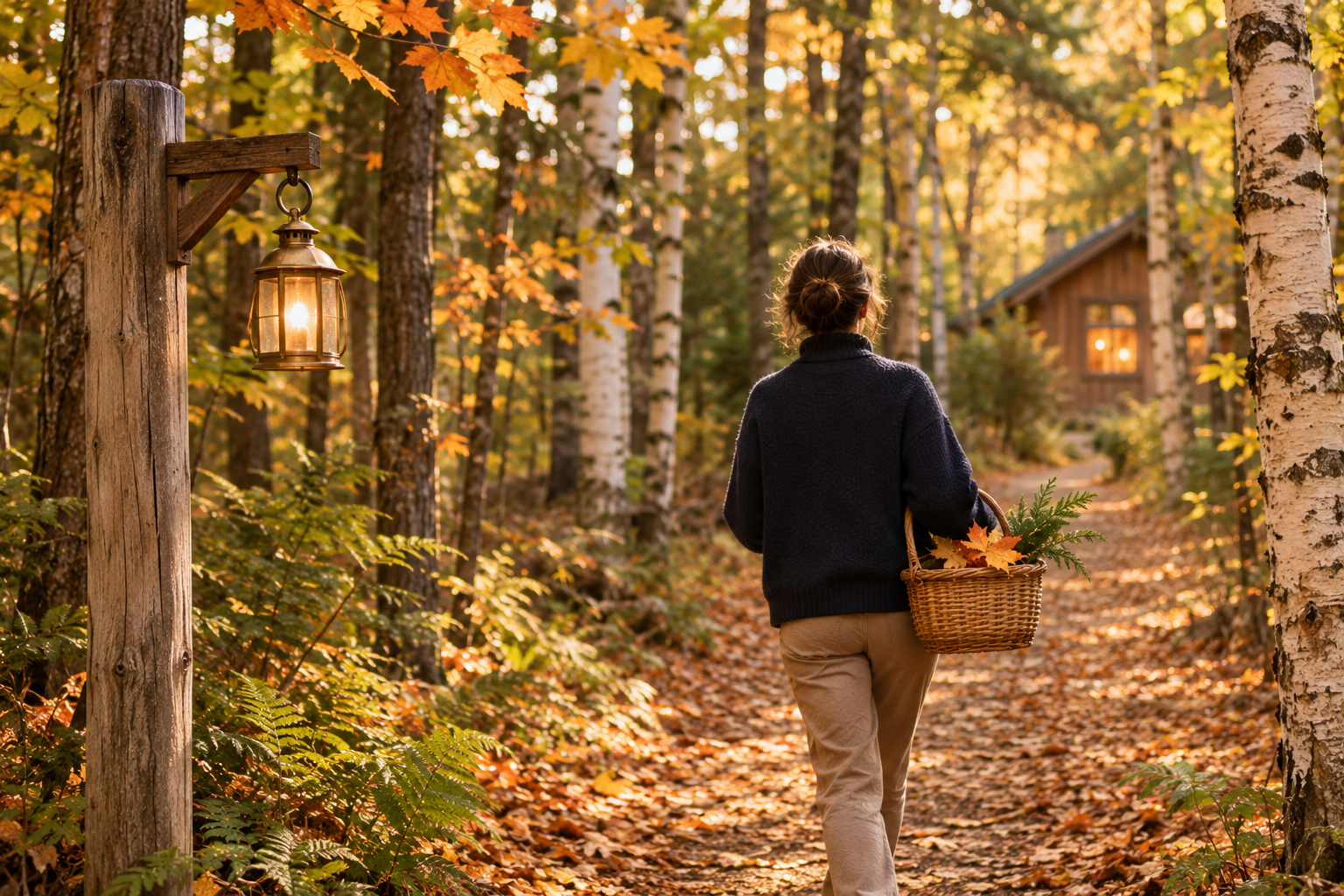
Before writing in a new tagline, website or marketing campaign, take a closer look at what makes your location special. Start with the property itself, then explore the surrounding community. What experiences are available nearby? Which local businesses and makers contribute to the area? What changes throughout the seasons?
Speak with local partners, revisit guest feedback and look at the experiences people travel to your region for.
These details can reveal opportunities to build a brand that feels connected to its surroundings rather than borrowing the same language used by every other retreat.
The land, the water and the seasons
Lakes, forest, escarpment, rivers, snow. Note what changes through the year, too. A retreat on Georgian Bay feels very different in February than it does in July, and both seasons can be part of your story.
The people, makers and traditions
Farms, maple producers, herbalists, potters, bakers, outfitters and local historians. Start with the suppliers already on your invoices, and the ones guests ask about at checkout. If three guests a month ask where the bread came from, the bakery belongs in your brand.
What you're closest to, in distance and in spirit
Then mark the few things the property sits closest to. Ontario is already promoted as a collection of distinct regions, so "beautiful lake views" won't set you apart from the lodge down the shore. Your edge may be the only private dock on a quiet bay, a cedar sauna built from trees cleared on your own land, or a morning cold plunge in the same river guests paddle in the afternoon.
Read the reviews, too. Guests often describe what they loved in plainer, warmer words than an owner would use.
Turn the place into one promise
Once you've identified what makes your location distinctive, choose one central idea to guide your brand. A clear promise helps your team, photography and website communicate the same experience.
Write the promise
Keep it to one sentence a guest could repeat to a friend. For example: "A forest retreat that follows the Haliburton Highlands' seasons, from spring sap runs to winter sauna nights." It names a place, a feeling and a reason to come back.
List the proof
Under the promise, write down every real thing that makes it true: the sugar bush you partner with, the trail map you hand out, the menu that changes with what's growing. If there aren't at least five pieces of proof, the promise is probably bigger than the stay.
Test it on a guest
Read the promise to a regular guest and ask a single question: does this sound like us? If they start telling their own story about the place, it's close. If they nod politely, keep going. Our post on how a clearer brand story shapes your name and tagline shows where the promise goes next.
Let the region shape the stay, not just the photos
A regional brand is something guests live through. If your promise is about the forest, the forest should show up in the room: wood from a nearby mill, a guided walk before breakfast, tea blended from plants that grow on the property, and a staff member who can tell a guest which trail is quietest at four o'clock.
Partners make this possible without adding staff. A nearby farm can fill the welcome basket. A paddling outfitter can run a sunrise session. A local potter can make the cups your tea is served in. Each partner also becomes another voice telling your story, on their own social media accounts and to their own customers.
Watch the gap between the photo and the stay
The quickest way to damage a regional brand is to borrow the region's scenery for a stay that doesn't reflect it. A homepage full of misty lakes, followed by a room that could be in any city, creates a gap guests notice. Some will say so in reviews, and those reviews often travel further than the website copy does.
Where guests meet your region before they arrive
Guests often discover your retreat before visiting your website. They might find you through Google Maps, Instagram, TikTok, regional tourism sites or AI search results from ChatGPT, Claude, Gemini or Muse. Your business information and messaging should tell a consistent story across these platforms. Amadeus found that 74% of U.S. travellers have used AI while planning a trip to help find hotels, routes and transport. That study is American, but Canadian travellers use many of the same tools, and those tools build their answers from what a retreat's website, listings and partners say about it.
Say where you are, plainly and the same way everywhere
Name the region, the nearest town and what guests can do nearby, on the website, in the Google Business Profile and on every listing. Google's guidelines for representing your business ask for accurate, real-world details, and a profile that matches your website is easier for people and AI tools to trust. If your profile needs work, our post on local SEO for Google Business Profile and AI recommendations covers the set-up step by step.
Borrow the reach of people who already speak for your region
Regional tourism organizations, local press, creators and nearby businesses already have audiences who love your area. Ontario's tourism bodies promote the province region by region, and a clear regional promise makes you easy to feature. A vague one tends to get skipped.
A Georgian Bay retreat that found its own voice
Picture a 12-suite wellness retreat on the shore of Georgian Bay. It has a wood-fired sauna, a small spa and loyal summer regulars. But its website reads like every other retreat in the province, and winter weekends sit half empty.
The owners walk the property, talk to their suppliers and read two years of reviews. Guests keep mentioning the same three things: the wind off the bay, the cold plunge from the dock, and the quiet after the cottagers go home. So the team builds its promise around that: the bay in every season, and especially in the quiet ones.
| Where it shows | Before | After |
|---|---|---|
| Homepage headline | "Relax and reconnect in nature" | "Sauna, cold water and the quiet side of Georgian Bay, all year" |
| Winter offer | Discounted rooms | A winter sauna weekend with a snowshoe guide from a local outfitter |
| Google Business Profile | Summer photos only | Photos and updates from every season |
| Partners | None named | A nearby bakery, a paddling outfitter and a ceramics studio, each named on the website |
Then they track what matters to them: winter direct bookings against the year before, the number of enquiries that mention the sauna or the bay, and whether reviews start repeating the promise back. They give it a full season before they judge it.
Regional branding mistakes that cost retreats repeat guests
These are the patterns we see most often when a retreat's regional story isn't landing:
- Leaning on clichés. Loons, canoes and sunsets belong to the whole province. Show the details that belong to you.
- Promising what the stay can't deliver. If you promise farm-to-table, the farm needs a name.
- Making health claims you can't support. Describe the experience, not a medical outcome. "A quiet morning in the forest" is a promise you can keep. "Cures stress" is not.
- Telling a different story on each platform. A forest retreat on the website and a "luxury day spa" on Google reads like two different businesses.
- Ignoring the people next door. Neighbours and nearby businesses are often your best ambassadors, and your best partners.
- Treating search as separate from your brand. The words on your listings are part of your brand, whether you chose them or not.
How Wondering Concierge builds a brand around your place
At Wondering Concierge, we help hospitality businesses identify what makes them different and communicate it clearly. Through brand strategy, website design and digital visibility, we bring that story together across the platforms where guests discover and evaluate your business.
Start with what's true
Our Concierge Brand Audit puts the website, Google Business Profile, listings, reviews and social media accounts side by side, and checks them against what guests say about the stay. You get a short, ranked list of where your regional story is missing or mixed, and what to fix first.
Then carry it everywhere guests look
- Brand strategy: the promise, the proof and the voice the team uses at the front desk and online.
- Website design: pages for the region, its partners and each season, built to load quickly on a phone.
- Google Business Profile: the region, nearby experiences and seasonal photos, kept current.
- Search Everywhere Optimization: listings, partner pages and content set up so Google, AI search tools and social media platforms describe you the same way.
This kind of work builds over time. A boutique Nordic spa client grew its customer base by an average of 114% year over year across six months of working together. That result came from the whole brand and visibility effort working together, not from any single change.
Wondering Concierge founder Miles Harding came to marketing from hospitality, including years in Ontario's cottage country. So we look at your region the way a guest does: what they see on the drive in, what they ask at the front desk, and what they tell a friend on the way home.
Make your region the reason they book
Start with what makes your location special, not a new logo. Identify what guests value most, build your brand promise around it and make sure your guest experience, website and online listings tell the same story.
When they line up, you'll likely notice it in small ways first: guests who mention the bay or the forest in their enquiry, more bookings in the quiet months, reviews that repeat your promise back to you. Over a year, that adds up to a fuller calendar in every season, filled by guests who chose you for where you are. If you'd like a second set of eyes on your regional story, a Clarity Call is a simple place to start.
How do I make my wellness retreat stand out from others in the same region?
Find what only your location offers, such as a specific lake or river, a local partner or a seasonal ritual, and build one clear promise around it. Then make sure your stay, your website and your listings all show it.
What is regional brand positioning for a wellness business?
It's the promise you make about what guests will experience because of where you are, backed by real proof such as local partners, seasonal experiences and your landscape. It gives guests a reason to choose you that a competitor can't copy.
Can a destination spa market its region without sounding like a tourism ad?
Yes. Focus on details guests will touch during their stay, such as the trail outside, the tea grown nearby or the lake they plunge into, rather than broad scenery. Specific details read as honest, while general ones read as advertising.
Should a wellness retreat partner with other local businesses?
Usually, yes. Farms, outfitters and makers can add experiences without adding staff, and each one shares your story with its own customers. Choose partners whose quality matches yours, and name them on your website.
How long does it take a regional brand to bring in more bookings?
It often takes a full season or two to see a clear change. Track direct bookings by month against the year before, enquiries that mention your region, and whether reviews start repeating your promise.
The first step is a free 30-minute Clarity Call. No pitch deck. You'll leave with at least one clear observation about where your brand is losing visibility or momentum, and one direction for what to fix first.
Miles runs every Clarity Call personally, with no obligation to continue after the call. Book Your Clarity Call Our deepest tier, an embedded strategic marketing partnership, is reserved for six founders at a time.This blog collection is written by Miles Harding and the Wondering Concierge team for the benefit of readers to be able to grow their business and get found online by more of their dream customers. The team includes human members with learned / lived experiences and expertise, as well as trained AI team members who assist with the creation and publication of this blog content. The team monitors Google and other guidelines for continued knowledge to help with SEO and AI usage. If you have any questions regarding the humans in the loop and how AI is used to follow these guidelines, contact Wondering Concierge at [email protected].